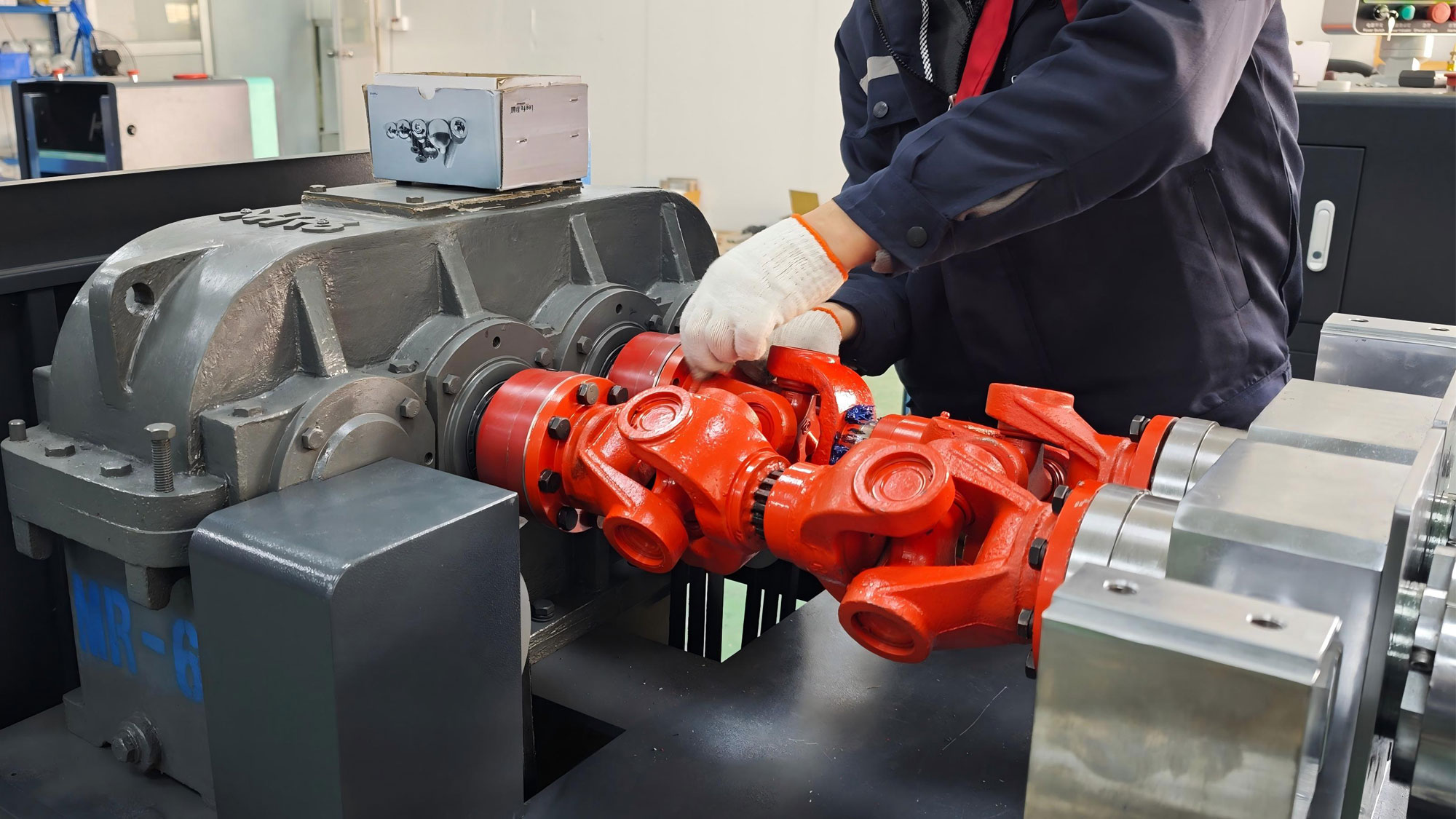
Rubber Mixing Mill Technology, Solutions, and Buying Guide | MILL Industry
Rubber Mixing Mill Technology, Solutions, and Buying Guide from MILL Industry
Achieving consistent, high-quality rubber compound dispersion is a fundamental challenge. Inconsistent mixing leads to batch variation, product defects, and wasted materials. A reliable Rubber Mixing Mill remains a critical workhorse in many production lines, from masterbatch preparation to final sheeting. This guide explores modern Rubber Mixing Mill technology, its core advantages, practical applications, and provides a clear framework for selecting the right equipment to optimize your mixing process, enhance product uniformity, and improve overall operational efficiency.
1. Rubber Mixing Mill's Core Technical Principles and Key Performance Indicators
A Rubber Mixing Mill, or open mill, operates on a relatively straightforward mechanical principle to achieve plasticization, mixing, and sheeting of rubber and plastic compounds. Its core function is to apply intense mechanical shear and compressive forces to the material.
The machine consists of two horizontally positioned, counter-rotating rolls. One roll typically rotates faster than the other, creating a friction ratio. As the compound is fed into the nip—the gap between the two rolls—it is subjected to shearing action. This shear force breaks down polymer chains (mastication), disperses fillers and additives uniformly, and blends different components into a homogeneous mass. The material adheres to the front roll, forming a continuous bank, and is repeatedly cut, folded, and fed back into the nip to ensure thorough mixing.
For professionals evaluating a Rubber Mixing Mill, several key performance indicators (KPIs) are critical:
* Roll Diameter and Working Length: Directly determines batch capacity and production throughput.
* Friction Ratio: The speed difference between the rolls (e.g., 1:1.1 to 1:1.4). A higher ratio increases shear, improving dispersion but generating more heat.
* Roll Surface Temperature Control: Precise heating and cooling (via drilled rolls or peripheral systems) are vital for processing temperature-sensitive compounds and preventing premature scorch.
* Drive Power & Torque: Sufficient motor power ensures the mill can handle high-viscosity compounds without stalling, especially during start-up with a full load.
* Safety & Control Systems: Modern mills include emergency brakes, nip guards, and programmable logic controllers (PLCs) for repeatable operations.
Compared to traditional, manually-controlled mills, modern advancements focus on precision, safety, and integration. Digital temperature control, automated batch timing, and data logging have replaced guesswork, leading to significantly improved batch-to-batch consistency and reduced operator dependency.
2. MILL Industry Rubber Mixing Mill's Core Advantages and Technical Barriers
At MILL Industrial Co., Ltd., our approach to engineering Rubber Mixing Mills is grounded in over 15 years of specialized R&D within the rubber and plastics machinery sector. We build equipment that addresses the real-world demands of production floors, focusing on durability, precision, and long-term value.
Our core technical advantages translate into direct benefits for your operation:
* Engineered for Robust Duty & Longevity: Our mills are constructed with heavy-duty cast frames and high-grade alloy steel rolls, hardened and ground to precise tolerances. This foundation minimizes deflection under load, ensuring consistent nip gap across the entire roll face for uniform sheet thickness. The result is a machine built for decades of reliable service with minimal maintenance downtime.
* Precision Thermal Management System: We utilize advanced drilled roll technology paired with high-efficiency temperature control units. This allows for rapid heating and, more critically, precise cooling to manage compound temperature within a tight window. This control is essential for preventing scorch in sensitive compounds and achieving optimal dispersion without degrading the polymer.
* Integrated Safety and Ergonomic Design: Safety is paramount. Our mills feature comprehensive safety systems including dual emergency stop cables, mechanical nip guards, and electrical interlocks. Furthermore, ergonomic adjustments for roll gap and controls reduce operator fatigue and enhance workflow efficiency.
* Full-Scale Customization Capability: We understand that one size does not fit all. Our full-process non-standard customization support allows us to modify drive power, roll dimensions, friction ratios, and auxiliary equipment (like stock blenders or automatic cutters) to create a Rubber Mixing Mill solution that fits your specific material, space, and output requirements perfectly.
These advantages are supported by our global localized after-sales service network, ensuring you have access to technical support, genuine spare parts, and maintenance expertise when and where you need it.
*Ready to see how a mill designed for precision and durability can stabilize your mixing process? Contact MILL Industry to discuss your specific compound and production goals.*
3. Rubber Mixing Mill's Typical Application Scenarios and Industry Solutions
The versatility of the Rubber Mixing Mill makes it indispensable across multiple sectors. Here’s how it delivers value in key industries served by MILL Industry:
Tire Manufacturing: Used for warming up compounds, blending different batches for consistency, and preparing tread and sidewall stock. A major tire manufacturer faced issues with carbon black dispersion variance in their warming mill lines, leading to slight variations in tread compound properties. MILL Industry provided a customized Rubber Mixing Mill with a optimized friction ratio and enhanced cooling capacity. The solution improved dispersion uniformity by approximately 18% and provided better temperature stability, contributing to more consistent tire curing characteristics.
Rubber Products (Seals, Gaskets, Rollers): Ideal for medium to small batch production of various rubber compounds. A producer of industrial rubber rollers needed to process a range of materials from EPDM to NBR in smaller quantities. Our solution involved a compact, easy-to-clean Rubber Mixing Mill with quick-change roll settings, allowing them to switch between compounds with minimal cross-contamination and downtime, increasing overall facility flexibility.
Plastic Modification and Masterbatching: Crucial for dispersing high loadings of colorants, additives, or fillers into thermoplastic carriers before pelletizing. A compounder specializing in flame-retardant polyolefin masterbatches struggled with achieving consistent dispersion of mineral fillers using older equipment. The MILL Industry team recommended a high-shear mill configuration. The resulting improved dispersion allowed the client to achieve target flame-retardant ratings with a 5% reduction in additive usage, lowering raw material costs.
Emerging Sectors (New Energy Materials, Ceramic Powders): Beyond polymers, mills are used for kneading and homogenizing electrode slurries for batteries or mixing ceramic powder precursors. For a client developing a specialized ceramic binder, we supplied a corrosion-resistant Rubber Mixing Mill with precise temperature and shear control, enabling them to develop a uniform, lump-free paste critical for their forming process.
In each case, our strength lies in understanding the unique material behavior and process requirements, then leveraging our customization expertise to deliver a fit-for-purpose Rubber Mixing Mill solution.
*Looking for a mixing solution tailored to your specific material, whether it's conventional rubber or a novel compound? Get in touch with our engineers for a customized proposal.*
4. Rubber Mixing Mill Buying Guide and Frequently Asked Questions
Selecting the right Rubber Mixing Mill is a significant investment. Here are key questions to consider and professional guidance to inform your decision.
1. What size/capacity mill do I need?
This depends on your average batch size and desired output. The working volume is roughly 40-50% of the theoretical volume between the rolls. Calculate your typical batch weight in liters/kilos and consult with suppliers like MILL Industry to match it to a mill with appropriate roll diameter (e.g., 16", 22", 26") and length.
2. How important is the friction ratio, and what should I choose?
The friction ratio is critical for shear intensity. A standard ratio like 1:1.25 is a good starting point for general-purpose rubber mixing. Higher ratios (1:1.4) are better for intensive dispersion tasks (e.g., masterbatch), while a 1:1.1 ratio is gentler for warming or sheeting heat-sensitive compounds. Discuss your primary materials with your supplier.
3. What type of temperature control is necessary?
For most applications, drilled rolls with a closed-loop temperature control unit are recommended. They offer faster response and more precise control than older steam heating systems. Ensure the chiller or heater capacity is rated for your compound's specific heat and desired cycle time.
4. What safety features are non-negotiable?
Always prioritize mills that meet or exceed regional safety standards. Essential features include: reliable emergency stop systems (e.g., pull-wires on both sides), fixed and movable nip guards, electrical safety interlocks, and clearly marked control panels.
5. Should I consider a new or used/refurbished mill?
A new mill from a reputable supplier like MILL Industry comes with the latest technology, full warranty, energy-efficient drives, and guaranteed performance. It is a long-term investment in reliability and consistency. A used machine may have a lower upfront cost but carries risks of hidden wear, outdated controls, and lack of support, potentially leading to higher total cost of ownership.
6. What post-purchase support should I expect?
Ensure your supplier offers comprehensive support. Key points include: availability of installation guidance, operator training documentation, a clear spare parts supply chain, and accessible technical service for troubleshooting. Our global localized after-sales network is structured to provide this critical support.
Focus on total value—reliability, precision, safety, and supplier partnership—rather than just the initial purchase price. The right Rubber Mixing Mill is a productivity asset for years to come.
Investing in the right Rubber Mixing Mill technology is a direct investment in your product quality and production efficiency. By understanding the principles, advantages, and selection criteria, you can make an informed decision that aligns with your operational goals. For a detailed analysis of your needs and a tailored equipment recommendation, contact the technical team at MILL Industrial Co., Ltd. today to request a consultation and explore your specific Rubber Mixing Mill solution.