
Customization Empowered & Hardcore Coating Technology: Mill Machinery’s Titanium Alloy Laboratory Internal Mixer Redefines New Standards for Precision Mixing
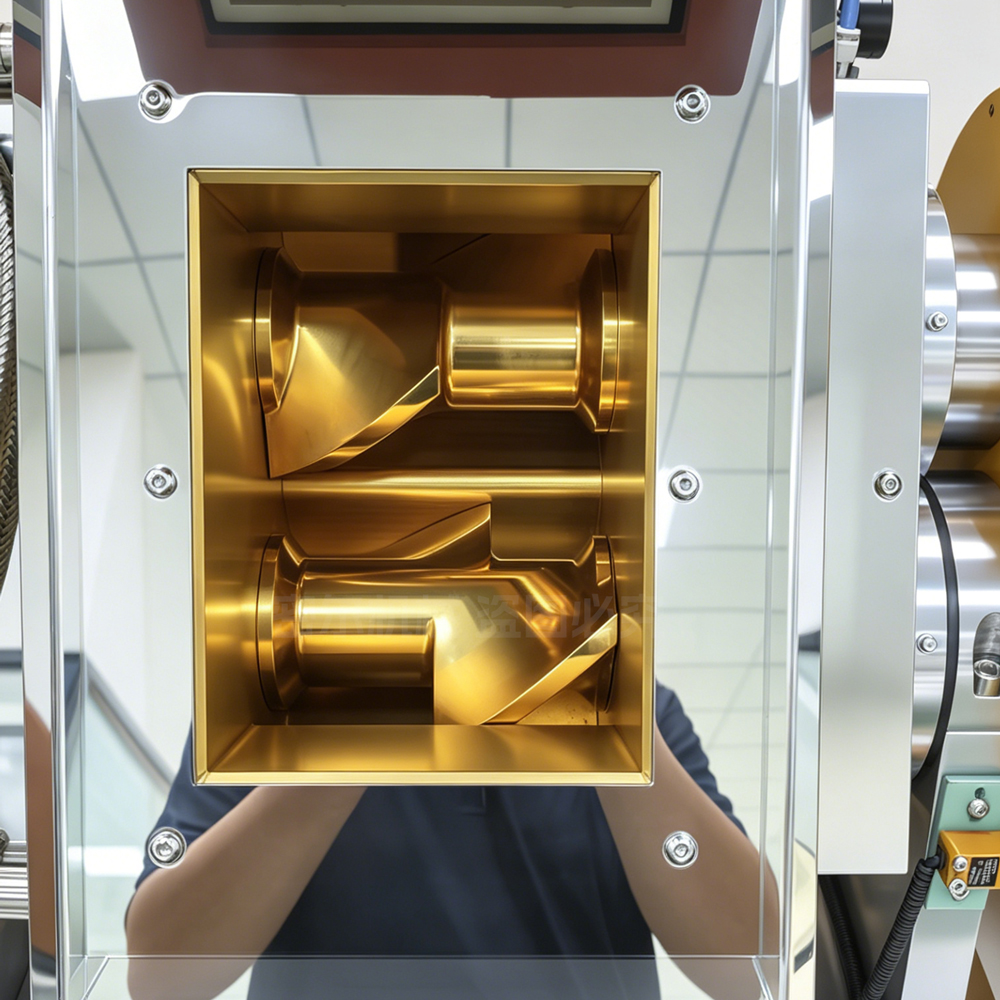
In the fields of polymer materials, fine chemicals, and new material research and development, laboratory internal mixers serve as core and critical equipment for formula debugging, sample trial production, and performance verification. Different from mass-produced industrial internal mixers, laboratory mixers have extremely stringent requirements for equipment precision, material stability, wear and corrosion resistance, and material cleanliness. Conventional standard internal mixers are prone to problems such as cavity wear, material residue, metal impurity contamination, and short service life, which directly affect the accuracy of experimental data and R&D progress.
Targeting the industry’s R&D pain points and differentiated application demands, Mill Machinery, an experienced manufacturer specializing in R&D and production of mixing equipment, launches a customizable titanium alloy laboratory internal mixer with a mature customized technical system. The core material-contact components of the equipment are made of high-quality titanium alloy and adopt full-range Titanium Nitride (TiN) surface treatment technology, achieving breakthroughs in ultra-high hardness, superior wear resistance and high stability. It perfectly adapts to laboratory mixing scenarios requiring high precision, high cleanliness and resistance to corrosive materials, providing reliable equipment support for new material R&D and formula optimization.
I. Full-dimensional Custom Design for Diverse Personalized R&D Scenarios
Laboratory mixing experiments for different industries and materials have vastly different requirements for the internal mixer’s cavity volume, speed parameters, temperature control accuracy, structural configuration and material specifications. Standard general-purpose equipment often fails to meet the experimental needs of niche formulas and special working conditions, easily resulting in uneven mixing, inaccurate temperature control and poor equipment adaptability.
Mill Machinery’s titanium alloy laboratory internal mixer features one-on-one customized services. Abandoning the fixed parameter design of traditional equipment, it supports full-dimensional personalized customization according to users’ experimental scenarios, material characteristics, experimental processes and capacity requirements. All core components including mixing rotors and mixing cavity structures, as well as equipment volume, speed range, temperature control system, sealing structure and opening/closing mode can be flexibly adjusted and adapted.
Whether for micro-sample experiments, high-precision formula debugging, or special working condition experiments such as high temperature, low temperature, vacuum and explosion-proof environments, we can optimize the equipment structure and parameters in a targeted manner to precisely match users’ exclusive experimental processes. This thoroughly solves the industry problems of insufficient adaptability and large experimental data deviation of general equipment, ensuring every piece of equipment perfectly fits users’ actual R&D needs.
II. Titanium Alloy Base Material Underpins High Equipment Performance
Laboratory R&D scenarios impose extremely high requirements on material purity. Traditional internal mixers made of ordinary steel or cast iron are prone to oxidation, rusting, material peeling and wear debris shedding during long-term operation. These defects will easily contaminate experimental materials, lead to distorted experimental data and hinder the precision of new material research and development.
All core components of Mill Machinery’s customized laboratory internal mixer are made of high-quality titanium alloy base material. Compared with traditional carbon steel and stainless steel, titanium alloy boasts outstanding advantages including light weight, high strength, good toughness, excellent fatigue resistance and stable chemical properties. It hardly reacts with acidic, alkaline or corrosive materials, preventing metal impurity precipitation from the material base and ensuring high cleanliness of experimental materials. Meanwhile, the titanium alloy base material features a dense structure with excellent impact resistance and deformation resistance, enabling long-term stable operation in high-frequency and high-precision repeated laboratory experiments. Its basic service life is far longer than that of ordinary laboratory internal mixers.
III. Full-range Titanium Nitride Surface Treatment Enables Ultra-high Wear Resistance and Hardness
To further break through the performance bottlenecks of equipment in wear resistance, temperature resistance and corrosion resistance, and solve common problems such as cavity wear, scratches and material residue caused by long-term mixing of hard and high-friction materials in laboratory mixers, our company applies full-coverage Titanium Nitride (TiN) coating treatment technology to all material contact areas, realizing a leap forward in core equipment performance.
Titanium Nitride is a well-recognized high-performance hard coating material in the industry with superior mechanical and physical properties. After professional surface treatment, the hardness of the equipment’s contact surface coating reaches over 2000HV with a Mohs hardness of 8-9, close to the hardness standard of sapphire. It greatly outperforms electroplating and ordinary hardening treatments adopted by conventional equipment. The TiN coating can effectively resist continuous scouring and wear from various hard fillers and high-friction materials, completely eliminating cavity wear and component loss caused by long-term experiments. It significantly extends the service life of core equipment components and reduces equipment maintenance costs and downtime losses.
In addition, the TiN coating has a low friction coefficient and a dense, smooth surface. It not only reduces material resistance during mixing and improves mixing uniformity, but also effectively avoids material adhesion and residue, greatly lowering equipment cleaning difficulty and preventing cross-contamination between batches of experimental materials. This guarantees the consistency and accuracy of each group of experimental data. Furthermore, the coating has an oxidation resistance temperature of over 600℃, maintaining stable performance without peeling, oxidation or failure under high-temperature working conditions. It is highly suitable for various special experimental scenarios such as high-temperature mixing and high-temperature vulcanization.
IV. Core Advantages for Targeted Laboratory R&D Scenarios
1. Customized Adaptation for Accurate Demand Matching: Full-dimensional customizable parameters and structures adapt to various personalized R&D scenarios including micro-sample experiments and special working condition/material tests, eliminating the adaptation shortcomings of general-purpose equipment.
2. High-purity Material Avoids Material Contamination: The titanium alloy base material features stable chemical properties without impurity precipitation. Combined with the high-cleanliness coating process, it fully meets the high-purity requirements of high-end formula experiments and new material R&D.
3. Ultra-high Wear Resistance Ensures Long-term Stable Operation: Equipped with full-range TiN coating, the equipment delivers far higher hardness and wear resistance than conventional products. It resists scouring, wear and adhesion with extremely low loss, maintaining stable experimental precision for a long time.
4. Temperature and Corrosion Resistance Adapts to Diverse Materials: The coating features high temperature resistance, oxidation resistance and corrosion resistance, supporting mixing experiments of acidic, alkaline, corrosive and high-hardness filler materials with strong universality.
5. Easy Cleaning and Low Maintenance: The smooth and dense coating surface has no pores and avoids material adhesion, enabling convenient cleaning, preventing batch cross-contamination and greatly reducing equipment operation and maintenance costs.
V. Summary
Against the trend of refined new material R&D and accurate experimental data, general-purpose laboratory internal mixers can no longer meet high-end R&D requirements. Leveraging mature customized technology and advanced surface treatment processes, Mill Machinery’s customizable titanium alloy internal mixer with TiN coating achieves all-round upgrades in material, technology, structure and performance. It solves scenario pain points through customized adaptation and guarantees equipment stability and experimental accuracy via high-hardness wear-resistant coating.
In the future, Mill Machinery will continue to deepen its layout in the segmented mixing equipment field, focus on the demands of laboratory R&D scenarios, and continuously optimize customized processes and equipment performance. We will provide high-performance, highly adaptable and stable customized mixing equipment solutions for enterprises and research institutions engaged in new materials, polymer materials and fine chemicals, empowering the upgrading of industrial R&D.